Short answer: a handmade cigar is rolled by a person, a torcedor, from whole tobacco leaves: long filler, a binder leaf and a wrapper leaf. A machine-made cigar is formed by machinery, usually from chopped short filler and often a sheet of homogenized tobacco. Handmade cigars burn slower, develop more flavor from first light to last third and cost more. Machine-made cigars are cheaper, very uniform and sold almost everywhere.
Neither kind is “wrong”. They are different products made for different smokers. This guide explains how each is made, how they compare on flavor, draw, consistency and price, and how to tell them apart on the shelf.
Handmade vs machine-made cigars at a glance
| Handmade (premium) | Machine-made | |
|---|---|---|
| Who makes it | A trained roller, often working with a buncher, by hand | Automated machines with a small number of operators |
| Filler | Long filler: whole leaves that run the length of the cigar | Usually short filler: chopped leaf and scraps |
| Binder and wrapper | Natural tobacco leaves chosen for strength, texture and appearance | Often a homogenized tobacco sheet; some use a natural leaf wrapper |
| Smoking experience | Slower, cooler burn; flavor that changes as you smoke | Faster burn; flavor that stays much the same |
| Consistency | Very consistent from a good factory, with small natural variation | Nearly identical from one cigar to the next |
| Price and availability | Higher price; tobacconists, factories and specialist shops | Low price; widely available in general stores |
How a handmade cigar is made
Every handmade cigar starts with leaf selection. Filler leaves from different plants, regions and primings are blended to set the cigar’s strength and flavor. A binder leaf holds that filler together, and a wrapper leaf, the most carefully chosen leaf of all, gives the cigar its look, much of its aroma and a large part of its taste.
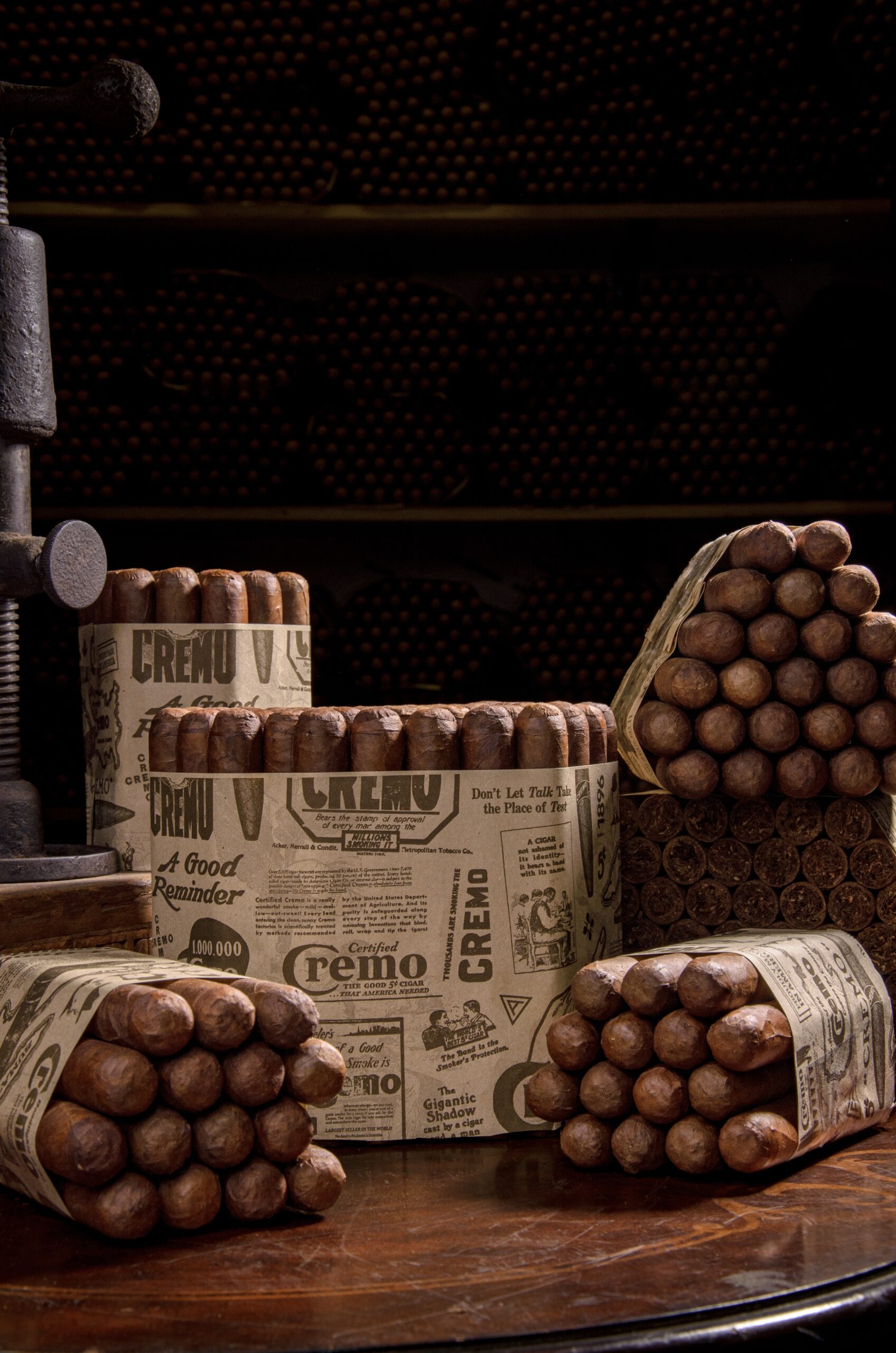
The roller gathers the filler leaves into a bunch, folds them so air can pass through evenly, and wraps them in the binder. The bunch rests in a wooden mold under a press so it sets in the right shape. Then the roller trims the wrapper leaf, stretches it around the bunch in a spiral, and finishes the head with a cap cut from the same wrapper. A finished cigar is checked for weight, firmness, appearance and draw before it is banded and boxed.
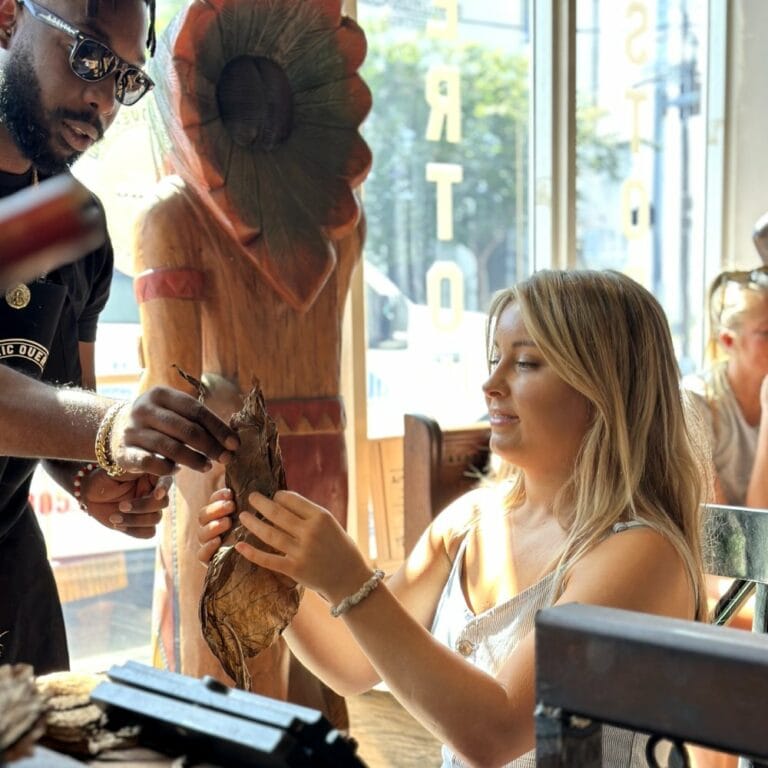
That sequence is the same whether a cigar is rolled in Havana, Santiago, Estelí or Miami. What separates good factories is the experience of the rollers and how strictly each step is checked. At Cremo, cigars are rolled by Cuban master rollers at our factory on Calle Ocho in Little Havana, Miami, and at Tabacalera Cremo in Puerto Plata, Dominican Republic. You can watch every stage on a Miami factory tour.
How machine-made cigars are made
Machine-made cigars are built for volume. Machines form the filler, roll the binder and apply the wrapper at a speed no roller can match. Because whole leaves are difficult for machines to handle, most machine-made cigars use short filler, and many use homogenized tobacco: ground leaf pressed into a continuous sheet that a machine can feed and cut.
The result is a cigar that looks and tastes almost identical every time and costs far less to produce. That is exactly why machine-made cigars account for most cigars sold. They suit smokers who want something familiar and affordable that they can buy anywhere, and they never go out of stock.
Long filler vs short filler
Filler is the biggest single difference between the two. Long filler leaves run the full length of the cigar, so the cigar burns evenly and holds a firm ash. Because several leaves sit side by side, each contributes its flavor at different points, and the smoke changes as the cigar burns down.
Short filler is chopped tobacco. It packs tightly, burns faster and hotter, and tends to drop its ash sooner. Some premium makers use short filler deliberately in smaller or lower-priced cigars, so short filler is not automatically a machine-made cigar, but almost every machine-made cigar uses it.
Flavor, draw and burn
A well-made handmade cigar changes as you smoke it. The first third often shows the wrapper; the middle brings in more of the filler blend; the final third is usually fuller. That development comes from the leaf blend and from how evenly the roller placed each leaf.
Draw, the ease with which smoke moves through the cigar, depends on how the bunch was folded and pressed. Too tight and the cigar is hard work; too loose and it burns hot and fast. Checking draw is one of the main jobs of quality control in a handmade factory.
Machine-made cigars are designed for an even, predictable draw and a uniform taste from start to finish. If you enjoy that steady profile, that is a perfectly good reason to choose them.
Consistency: where machines have the edge
Machines make cigars that are close to identical. Handmade cigars from a good factory are also very consistent, because each roller works to set weights and measurements and every batch is checked, but natural leaf always varies a little from season to season. Experienced smokers usually consider that small variation part of the appeal; if absolute sameness matters most to you, a machine-made cigar delivers it.
Price and availability
A handmade cigar takes skilled time: selecting leaf, bunching, pressing, wrapping, capping and checking. Long filler and natural wrapper leaves also cost more than chopped leaf or homogenized sheet. That is why premium handmade cigars cost more and are sold mainly through tobacconists, factory shops and specialist online stores, while machine-made cigars are sold in convenience stores, gas stations and supermarkets.
How to tell if a cigar is handmade
- Look at the head. Handmade cigars are finished with a cap, a small round piece of wrapper applied by hand. Machine-made cigars usually have a uniform, molded or pre-cut head.
- Look at the foot. In a long filler cigar you can see the folded edges of whole leaves. Short filler looks like evenly chopped tobacco.
- Check the wrapper. A natural wrapper shows veins, a slight sheen and small color variation. A homogenized wrapper looks flat and perfectly even.
- Read the box. Many premium cigars are labeled “handmade”, “hecho a mano” or “totalmente a mano” (totally by hand).
- Consider the price and the shop. A handmade cigar sold for a few cents is unlikely.
Where handmade cigars come from
Cuba is where the craft began, and Cuban techniques still shape how cigars are rolled everywhere. The Dominican Republic is one of the largest producers of premium handmade cigars and is known for refined, balanced blends. Nicaragua and Honduras are known for bold tobaccos and for blends that combine leaves from several countries.
Miami has its own place in that history. Cuban rollers who settled in the city carried their trade with them, and Little Havana is still where you can watch cigars made by hand. Cremo works in both traditions: small-batch production and new blends in Miami, and larger production in Puerto Plata.
Try handmade cigars from Cremo
The easiest way to compare is to smoke a few side by side.
- Variety Pack: a mix of wrapper profiles, strengths and flavor notes in Robusto or Toro.
- Premium cigars: singles and 5 or 10 count packs of each Cremo line.
- Cremo cigar club: 4, 8 or 10 hand-rolled cigars delivered every month.
- Factory tour: see the rolling process in Little Havana.
Frequently asked questions
Are handmade cigars better than machine-made cigars?
They are different. Handmade, long filler cigars offer a slower burn and flavor that develops as you smoke. Machine-made cigars are cheaper and more uniform. Which is better depends on what you want from a cigar.
What does “long filler” mean?
Long filler cigars use whole tobacco leaves that run the length of the cigar, rather than chopped short filler.
Are all premium cigars handmade?
In the cigar trade, “premium” usually means a handmade cigar with long filler and a natural leaf wrapper and binder. Some brands use the word more loosely, so check the box for “handmade” or “totalmente a mano”.
Are Cremo cigars handmade?
Yes. Cremo cigars are rolled by hand by Cuban master rollers at our factories in Little Havana, Miami, and Puerto Plata, Dominican Republic.